
SunTao Lai
April 28, 2026


You might be comparing Tofu versus Dext because your current setup can't handle what your clients are actually sending. Handwritten receipts from trade shows, Chinese supplier invoices, 200-page bank statements, wholesale documents with 60 line items per page. These aren't edge cases if you work across markets or industries.
One tool extracts what it can and rations the rest through monthly credits. The other processes everything with no toggles, no limits, and no setup overhead. That gap shows up fast when you're trying to close books for 40 clients in three days.
TLDR:
Dext is a bookkeeping automation tool built around receipt capture and expense management. You can submit documents through a mobile app, email forwarding, or direct upload, and Dext uses OCR to pull supplier names, dates, tax details, and payment amounts. It connects to Xero, QuickBooks, Sage, and 30+ other accounting systems.
The workflow assumes you've done the configuration work upfront. Supplier rules and category mappings need to be set before automation kicks in, which means there's a setup cost before you get value out. For firms focused on mobile expense submission and client-facing receipt collection, that tradeoff may feel reasonable.
Line-item extraction exists, but Dext treats it as an add-on, not a default. Depending on your plan, per-document limits apply. So if your clients send multi-line wholesale invoices regularly, you're either paying more or handling those lines yourself.
Tofu was built for accounting firms drowning in document processing. Upload an invoice, receipt, or bank statement and Tofu reads every line item, codes it to your chart of accounts, and publishes directly to Xero or QuickBooks. No rule-building required.
The key difference from legacy OCR tools: Tofu doesn't need you to configure anything before it starts working. Connect your accounting software or upload a historical ledger, and the AI reads your existing coding patterns right away. When you correct an extraction, Tofu learns. That knowledge persists across staff changes, growing more accurate over time.
Where Dext leans on upfront configuration, Tofu flips the model entirely. The AI does the setup work for you.
| Feature | Tofu | Dext |
|---|---|---|
| Line item extraction | Every line on every invoice automatically extracted with description, quantity, unit price, account code, and tax treatment. No limits, no credits, no toggles. | Available but gated per supplier. Each extraction draws from monthly credit allowance. Requires active management of which vendors qualify. |
| Setup and configuration | Zero configuration required. AI reads existing coding patterns from Xero or QuickBooks immediately. Learns from corrections permanently. | Requires upfront rule-building, category mappings, tax rules, and supplier-specific coding patterns before automation delivers consistent results. |
| Language support | 200+ languages including Arabic, Chinese, Thai, Japanese, Korean, handwriting. Automatic side-by-side English translation. UI flips to right-to-left for Arabic and Hebrew. | Handles multiple languages and currencies for standard typed documents across common European and North American markets. Struggles with handwriting and less common scripts. |
| Bank statement processing | Unlimited processing of any bank, any format, up to 1,000+ pages. No credits consumed. Assign tax types and account codes during upload for one-pass reconciliation. | Extracts from PDF bank statements but each one counts against monthly credit allowance. High-volume months require rationing which statements get automated. |
| Pricing structure | Flat monthly pricing with unlimited users. Pro: $79/month for 20 clients. Business: $199/month for 50 clients. Enterprise: $399/month for 125 clients. | Practice Plans start at $239.19/month for 10 clients. Business plans run $34 to $100/month depending on volume and user counts. Costs scale with usage. |
| Best suited for | Accounting firms processing high volumes of complex invoices, multilingual documents, and bank statements across diverse client bases. Especially strong in Southeast Asia, Middle East, and markets with non-English documents. | Firms focused on expense reporting and receipt capture through mobile apps. Works well for those needing native integrations with Sage, FreeAgent, or similar systems. |
Here's what Tofu does that Dext doesn't:
Tofu works especially well for firms handling complex multilingual documents, high-volume wholesale invoices, and clients across diverse markets where legacy tools simply stop working.

Line-item extraction is where the gap between Dext and Tofu becomes most visible in day-to-day work.
Dext does offer line-item extraction, but it's gated. You toggle it on per supplier, and each extraction draws from your monthly credit allowance. For firms processing hundreds of invoices, that means actively managing which vendors qualify for full extraction and tracking credits before month-end. It turns a capability into a resource allocation problem.
Tofu extracts every line on every invoice, always. No toggle, no credits, no triage. Each line includes description, quantity, unit price, account code, and tax treatment, coded automatically to your chart of accounts. A 3-line receipt gets the same treatment as a 50-line wholesale invoice.
One detail worth noting: Tofu uses high-precision decimal calculations when computing unit prices. That matters for invoices with fractional quantities, bulk commodity pricing, or multi-currency conversions, where small rounding differences compound across lines and create reconciliation headaches. Invoice OCR accuracy varies substantially between traditional OCR and AI-powered extraction, especially for line-level data. As one Tofu customer put it:
"Our clients have been asking for line item extraction and we haven't been able to provide them. We were trying to push Dext for it for I believe about two years but nothing came out." - Tengku Adibah T. Kamarudin, Director, Accounting Superhero (Malaysia)
If your clients regularly send complex, multi-line invoices, Dext's credit-based model means you're either paying more or finishing the job yourself.
Dext's automation is real, but it comes after configuration work. You build category mappings, tax rules, and supplier-specific coding patterns before the tool delivers consistent results. When a team member leaves, that rule logic doesn't transfer in any useful form. Someone has to rebuild it for new clients or new staff.
Accounting automation delivers clear time savings when implemented properly, but setup overhead directly impacts time-to-value.
Tofu skips that step entirely. Connect Xero or QuickBooks, and the AI reads your existing coding history within minutes. No rules to write, no templates to build. It learns your chart of accounts, supplier history, and tax treatments from what's already there.
When you correct an extraction, Tofu remembers it permanently. A correction made by a bookkeeper who left three years ago still applies today. Rules-based systems lose that institutional knowledge the moment someone leaves.
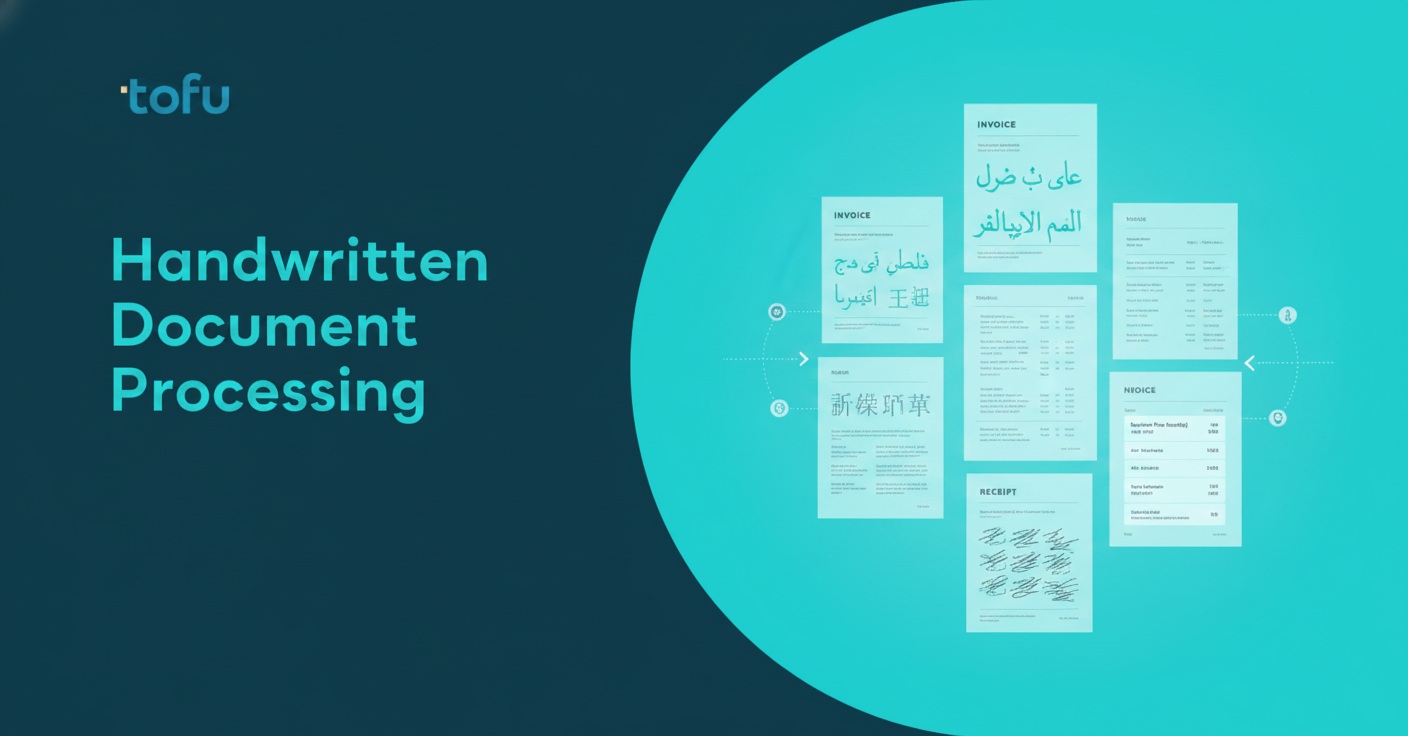
Dext handles multiple languages and currencies well enough for firms working with standard typed documents across common European and North American markets. Exchange rate support and multi-currency reporting are there. For most international expense workflows, it gets the job done.
Where it runs short is at the edges: handwritten receipts, Arabic invoices, Chinese fapiao, Thai supplier documents. These aren't edge cases in Southeast Asia, the Middle East, or Africa. They're Tuesday.
Tofu processes 200+ languages natively, with no language selection required. Arabic, Chinese, Thai, Japanese, Korean, Malay, Hindi, and Zulu: extracted and translated side-by-side in English automatically. Handwritten receipts, annotations, and fully handwritten invoices are read where other tools return nothing.
For firms serving Arabic or Hebrew-speaking clients, Tofu's entire UI flips to right-to-left layout automatically. If you're looking at Hubdoc alternatives, this multilingual capability is worth considering. That's not a niche detail. It's the difference between a tool that works in your market and one that technically supports the language but wasn't built for it.
Dext extracts from PDF bank statements, but each one draws from your monthly credit allowance just like any other document. High-volume months mean you ration which statements get automated extraction and which don't.
Tofu puts no limits on bank statement processing. Any bank, any format, statements tested up to 1,000+ pages: no credits consumed. Every transaction comes out with date, description, amount, and debit/credit classification.
The bigger difference is what happens after extraction. Tofu lets you assign tax types and account codes during upload, so reconciliation happens in one pass. Extract, then code manually? That step disappears entirely.
Dext's Practice Plans start at $239.19/month for 10 clients (or $207.99/month on annual billing). Business plans run $34 to $100/month depending on document volume and user counts. Scale up, and the costs scale with you, sometimes unpredictably.
Tofu's pricing is flat and straightforward:
Every plan includes unlimited users. No per-seat fees, no credit rationing, and no add-ons for line items or bank statements. See how this compares in Tofu vs Hubdoc. For 50 clients, that's roughly 75% less than Dext while covering features Dext gates behind extra charges.
One real example: Burger Accounting in South Africa pays 3,000 ZAR/month for Dext covering 10 clients. Tofu's Business plan covers 50 clients at $199/month, five times the clients at a fraction of the cost.
Dext holds its own for firms built around expense reporting and receipt capture, especially those running on Sage, FreeAgent, or other systems where Tofu relies on CSV exports. If native integration with those specific systems is the deciding factor, that's a real consideration worth weighing.
For accounting firms processing invoices, bank statements, and multilingual documents at volume, Tofu covers what Dext doesn't: zero setup overhead, full line item extraction on every document, 200+ languages including handwriting, bank statements without credit limits, and flat pricing that covers your whole team.
Firms process more complex documents, across more clients, without adding staff or rationing features by the credit.
If your bottleneck is data entry, Tofu removes it.
When you're choosing between Tofu vs Dext, the core difference is setup vs. instant operation. Dext delivers results after you've done the setup work, built the rules, and managed your credit allocation. Tofu reads your existing coding patterns, extracts every line on every document, and learns from each correction your team makes. Watch a 2-minute demo with real invoices to see how it handles your workflow.
Start with your invoice types and pricing sensitivity. If your clients send multi-line wholesale invoices regularly, Tofu extracts every line automatically at no extra cost, while Dext gates line items behind credit limits. If you process documents in Arabic, Chinese, Thai, or handwritten receipts, Tofu handles those natively where Dext struggles. Pricing-wise, Tofu's Business plan covers 50 clients at $199/month with unlimited users, compared to Dext's $239/month for just 10 clients.
Dext processes bank statements but counts each one against your monthly credit allowance, which means you'll ration which statements get automated during high-volume months. Tofu puts no limits on bank statement processing: any bank, any format, up to 1,000+ pages. You assign tax types and account codes during upload so reconciliation happens in one pass instead of extract-then-code-manually workflows.
Tofu works best for accounting firms processing high volumes of complex invoices, multilingual documents, and bank statements across diverse client bases, especially in Southeast Asia, the Middle East, and markets where handwritten receipts and non-English documents are routine. Dext fits firms focused primarily on expense reporting and receipt capture through mobile apps, particularly those needing native integrations with Sage or FreeAgent where Tofu currently relies on CSV exports.
No configuration required. Connect Xero or QuickBooks and Tofu reads your existing coding patterns immediately (chart of accounts, supplier history, tax treatments). When you correct an extraction, Tofu learns permanently, so knowledge survives staff turnover. Dext requires you to build category mappings, tax rules, and supplier-specific patterns before automation delivers consistent results.
Yes. Tofu extracts every line on every invoice automatically (description, quantity, unit price, account code, and tax treatment) with no toggles, credits, or add-on fees. Dext offers line-item extraction but you toggle it on per supplier and each extraction draws from your monthly credit allowance, which means you're either paying more or manually typing lines on complex invoices.